
|
In today's rapidly evolving landscape, staying ahead of the curve is not just an advantage—it's a necessity. With civil disturbances on the rise across the United States, equipping yourself with the knowledge and skills to navigate these challenges is paramount. That's why you need to attend this groundbreaking webinar on impact munitions.
Why Attend? ✓ Timely and Informative: Stay abreast of the latest developments in impact munitions amidst escalating protests and civil disturbances. ✓ Comprehensive Coverage: From guidelines to training, from facts to myths, delve into every aspect of impact munitions usage. ✓ Legal and Financial Insights: Learn from recent incidents and understand the legal, financial, and career risks associated with their use. ✓ Risk Mitigation Strategies: Discover essential tactics for managing risks and ensuring the safety of officers and civilians alike. ✓ Preparation for High-Profile Events: With upcoming national conventions and potential high-profile incidents, be well-prepared to navigate complex situations. What's Covered?
Join us for an enlightening live, facilitator-led session that promises to arm you with the insights and strategies needed to navigate the challenges of today's environment with confidence. Don't miss out—register now and take the first step towards proactive risk management and public safety excellence. DATE Tuesday, July 16, 2024 TIME 9:00 a.m. – 10:30 a.m. PDT (Noon in New York) FACILITATOR A. David Berman, M.S. is a nationally recognized munitions, defensive tactics, impact tool, and firearms instructor who is a sworn Pennsylvania Constable. A former member of a medium-sized police department’s Emergency Services Unit, he is an Americans for Effective Law Enforcement (AELE) Certified Litigation Specialist and serves as Vice President of the IPICD. TUITION $49 per person for IPICD members; $75 per person for non-members. Tuition includes instruction and certificate. Register here. Secure your spot today and be ready to face tomorrow's challenges head-on! Policy, Training, and Tactical Responses to the Barring, Blocking, and Censuring of Excited DeliriumThese two webinars qualify for IPICD ACE Instructor update and renewal These are the two most important and practical instructor-led webinars you can attend in 2024. Barring, blocking, and censuring the use of Excited Delirium in police reports, testimony, references, training, lesson plans, policies, etc. are going to have a negative impact on public safety and careers. Peace officers are being targeted for possible criminal prosecution and must clear high hurdles in civil litigation. On Thursday, April 4, 2024, Colorado Governor Jared Polis, signed into law a bill that prohibits the use of “excited delirium” in public safety training. Peace officers are prohibited from using the term to describe a person in an incident report. Colorado law mirrors a similar criminal statute passed in California. Three other states currently have similar pending legislation some of which is more restrictive than the California and Colorado laws. Part I webinar topics:
John G. Peters, Jr., CLS, PSDS, Ph.D., founder, president, and chief learning officer of the Institute for the Prevention of In-Custody Deaths, Inc. (IPICD) will facilitate the webinars. A judicially qualified expert witness with over 40 years of experience, he is a respected author, trainer, and instructional designer. Length 90 minutes for each webinar. Dates and Times Part I: Thursday, May 16, 2024; 9 a.m. - 10:30 a.m. PDT (noon-1:30 p.m. East Coast) Part II: Thursday, May 23, 2024; 9 a.m. – 10:30 a.m. PDT (noon-1:30 p.m. East Coast) Tuition (includes both webinars) $95 per person, IPICD members only, live or On-Demand $125 per person, non-IPICD member, live or On-Demand Tuition includes both webinars, Learner Companion™, articles, information, checklist (will be provided prior to Part II), and certificate for each attended webinar. Registration deadline is May 10, 2024. Don’t Delay. Register today! Cancellation fee of $50 if made after May 10, 2024. On-Demand versions will be available within 30 days following the webinar broadcast. These two webinars qualify for IPICD ACE Instructor update and renewal.
Instructor-Led Training Spit Restraint™ Instructor Program (Version 2.0) Scientific Research Completed IPICD staff conducted primary research to determine the liquid impedance of several "spit masks" on July 14, 2021. All "testing" was video recorded. IPICD funded this scientific study of popular spit masks available in the United States to evaluate their effectiveness at stopping spittle that pose dangers to LEOs and others. This seminal study’s findings, coupled with spit mask air flow findings from another study, provide objective scientific data and other information about spit masks and how they can be used in de-escalation tactics. Many thanks to Safariland and to Stearns Wear for donating their products for testing. High Profile Uses of Spit Masks Following a March 2020 high profile, temporal, arrest-related death of an agitated and combative person where a LEO applied a spit mask, “spit hoods” became a hotly debated controversial device. By the way, the agitated person’s CAUSES of death included Excited Delirium and “complications of asphyxia in the setting of physical restraint.” Spit Masks and Force Putting spit masks on individuals by law enforcement officers (LEO) are uses of force requiring compliance with Constitutional standards of care (or equivalent), and with any applicable more restrictive state (Province) statutory or regulatory standards. Surprisingly, approximately 68% (n=357) of the Americans for Effective Law Enforcement (AELE)-IPICD spit mask survey respondents did not know or believe that applying a spit mask is a use of force. Risk Management Now, more than ever, your agency needs to have scientific and proper responses to those who challenge the use of "hoods" and who claim "spit masks" cause deaths. One way to get prepared is to enroll officers in the upcoming IPICD virtually instructor-led Spit Restraint™ Instructor program. It's live and online so you can take it in the office, in the comfort of your home, or wherever you choose and ask real-time questions of the presenters. This eliminates travel, per diem, and hotel costs. With these budget savings, several officers can be enrolled to become qualified instructors. Program Topics The following are some of the topics that are covered:
Qualification Assessments The IPICD Spit Restraint™ Instructor qualification program assesses each learner in three learning domains: cognitive (written assessment), affective (personality), and psychomotor (skills). Passing each learning domain is required to qualify as an IPICD Spit Restraint™ Instructor. Following the virtual instructor-led program, each Spit Restraint™ Instructor candidate will complete an assessment. Required Materials Agency-authorized spit mask. Instructors A. David Berman, M.S., CLS and/or John G. Peters, Jr., CLS, Ph.D. are the scheduled instructors. Introductory Tuition and Included Materials $195 per person Includes: Instruction, lesson guide, Learner Companion, group exercises, a User-Level PowerPoint presentation you can modify, and upon successful completion of the program, an instructor certificate. Help save careers and lives. Virtually Instructor-Led Training Microlesson Designer and Instructor Available live, online 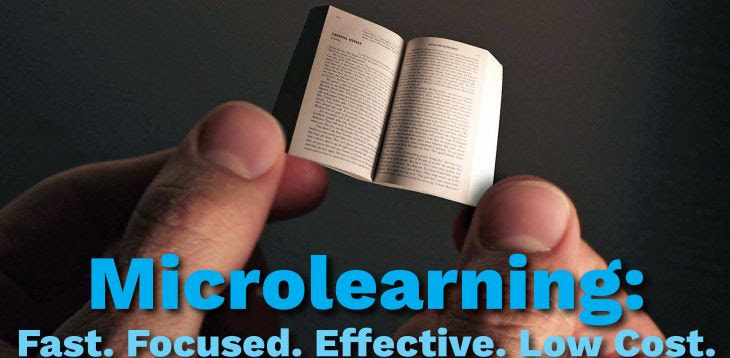 Microlessons are short. They focus on one topic, one outcome, are flexible, available online or offline, and are helpful to the learner. They are quickly developed at no cost other than development time. These bite-size lessons must be properly developed, produced, and delivered, hence the need for qualified Microlesson designers and instructors. Learn these skills from the instructors, who are qualified and experienced instructional designers and presenters. They will teach you how to identify and select microlesson topics, develop their content, deliver them, and evaluate learning. You will also learn how to develop, no-cost, auto-graded online assessments. Upon completion of the program, you will have developed a microlesson: unit plan (one page), online assessment, and presentation (2-15 minutes) that can be used to teach others. By the end of the program, you will have developed a professional microlesson for immediate use. Program topics include:
Qualification Assessments The IPICD Microlesson Designer and Instructor qualification program assesses each learner in three learning domains: cognitive (written assessment), affective (personality), and psychomotor (skills). Passing each learning domain is required to qualify as an IPICD Microlesson Designer and Instructor. Following the virtual instructor-led program, each Microlesson Designer and Instructor candidate will complete an online assessment, and then produce three microlesson deliverables (two are completed during the program). None of the deliverables is difficult, and generally it will take about one hour to complete the third deliverable. Required deliverables are (1) submission of a unit plan (generally one page) that identifies microlesson goals, performance measures, and content; (2) creation of an online assessment (1 or 2 questions) for the microlesson you develop; and (3) production of a microlesson (2-15 minutes in length) using your Smartphone, video camera, or computer camera recording your presentation via Zoom or Microsoft Teams. Submit your short video to the IPICD for assessment. A video assessment rubric will be emailed to each person who enrolls in the IPICD Microlesson Designer and Instructor program prior to the beginning of the program. Required Materials Computer with sound, computer monitor, internet access, keyboard, mouse (touch screen), comfortable chair or seat, printer, video with audio recording device (e.g., Smartphone), and writing instrument for taking notes. Instructors A. David Berman, M.S., Marilyn Janas, CTC, M.B.A., M.A., and John G. Peters, Jr., CTC, Ph.D. are the scheduled instructors. Tuition $195 per person. Includes program handbook, instruction, evaluation of deliverables, and certificate. No travel, hotel, or per diem costs. Class size is limited. Arrest-Related, In-Custody Deaths, Agitated Chaotic Events Instructor Program (version 6.5) The post-George Floyd culture has changed the law enforcement landscape. Peace officers are being criminally prosecuted and convicted in higher numbers, and that trend shows no signs of slowing. California enacted a statute in January 2022 that can hold peace officers accountable for individuals who die from asphyxiation if officers cause a subject's respiratory airway to be compressed or if they impair a person's breathing or respiratory capacity, which includes application of pressure or body weight to a person's neck, torso, or back. This includes methods of restraining the individual. Colorado, too, has passed legislation classifying "excited delirium" as not being a "medical emergency," thus prohibiting the use of the sedative Ketamine on active, combative, agitated, individuals. TOPICS The IPICD Instructor program is based upon scientific, medical, experiential, and legal research and is the most current multidisciplinary program available on the subject. Topics include, but are not limited to:
TUITION $495 per person. Materials include a program workbook, handouts, articles, table-top exercises, handouts, special supplemental pages on the IPICD Website to stay current with new research and analyses, online assessment, certificate, and more. Required Materials (Virtual) Computer with sound, computer monitor, internet access, keyboard, mouse (touch screen), comfortable chair or seat, printer, video with audio recording device (e.g., Smartphone), and writing instrument for taking notes. Consecutive Days and Times The 16-hour virtual instructor-led program meets four hours (9am - 1:pm Pacific Time; Noon-4p.m. New York) on four consecutive days. Attendance is required each day. Instructor Certificate Upon successful completion of the instruction and an online assessment, you will receive an instructor certificate. This IPICD 16-hour instructional program will qualify you as an instructor to teach a User-Level program to your colleagues and others to save lives, save careers, minimize governmental entity liability, and officer liability. Help save careers and lives.
|
 RSS Feed